Harley · Andalusia
Andalusia at Walking Pace
White villages, empty plains and a mountain road to Ronda that was made for a machine with long legs. Southern Spain in spring is the best week a cruiser can have in Europe.
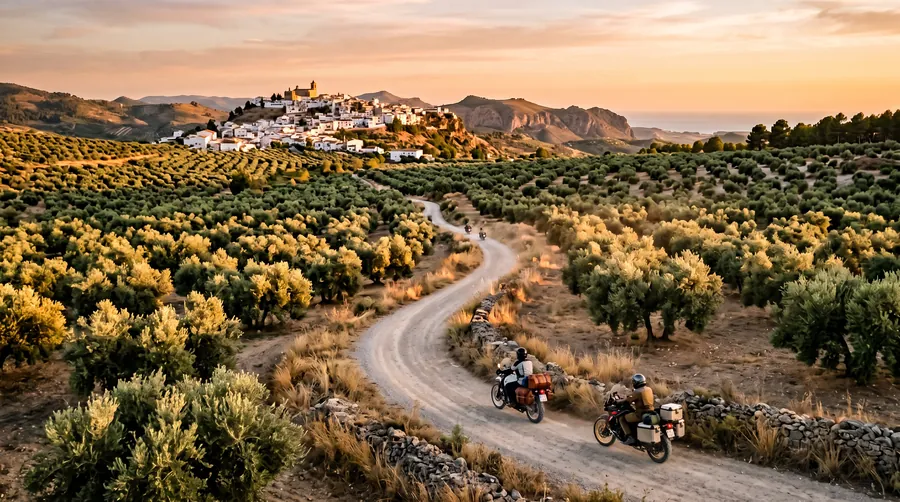
Spain built a great deal of road in the last thirty years, and the traffic went onto the motorways and left the old ones nearly empty. In Andalusia that leaves a network of two-lane roads across olive country, over the Serranía de Ronda and out to a coast that still has gaps in it. For a touring cruiser it is close to ideal: long, flowing, warm and quiet.
The shape of a week
Fly to Málaga, ride out of the coastal sprawl within the hour and do not go back to it. The classic loop runs Ronda, Grazalema, Zahara, Arcos, then east through Antequera and the lakes, up into the Sierra Nevada foothills near Órgiva, and back along the Cabo de Gata coast if you have the days. Roughly 900 kilometres over six days, with two nights each in Ronda and the Alpujarras so you can ride without luggage.
The roads worth the fuel
- A-397 from San Pedro to Ronda. Forty kilometres of well surfaced mountain road with long radii and enormous views. Early morning, before the tourist traffic.
- A-372 through the Sierra de Grazalema. Cork oaks, limestone, and villages that appear whole on a hillside. The wettest corner of Spain, and usually the greenest.
- A-4050 towards the Sierra Nevada. The highest paved road in Europe if you take it all the way, though on a heavy machine the last stretch is a novelty rather than a pleasure.
- The Alpujarra balcony roads. Narrow, slow, spectacular and best ridden in the late afternoon, ending in a village with a terrace.
Andalusia gives you the one thing a heavy machine wants most: roads that go somewhere, without asking you to fight them.
Season matters more than route
March to May and late September into November. The olive country is green in spring and gold in autumn, and the temperature sits where leather is comfortable. Summer inland is genuinely severe, with 40 degrees in the Guadalquivir valley by noon, and riding in it is a health question rather than a comfort one. Winter is mild on the coast and cold in the mountains, with snow closing the high roads.
Practicalities
Fuel is cheap by European standards and stations are frequent except in the empty stretches north of Granada, where a full tank before a long leg is worth the two minutes. Roads are excellent, policing is polite and speed limits are enforced by camera rather than patrol. The one hazard worth naming is gravel washed onto mountain roads after rain, which sits invisibly in the shaded corners.
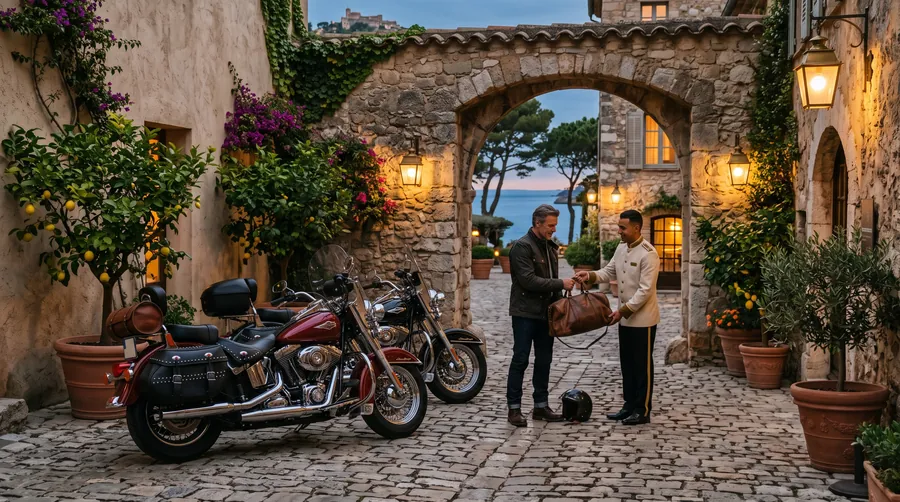
Book hotels with parking in the historic centres. Ronda, Arcos and the Alpujarra villages have narrow streets, steep cobbles and very few places to leave a large machine, and the difference between a hotel with a gate and one without is the difference between a relaxed evening and a walk with your luggage.
What it costs
Rentals from Málaga run 120 to 180 euro a day for a large touring machine in spring. Good rural hotels are 110 to 180 a night, considerably less than Mallorca in season. Dinner for two with wine, away from the coast, is 40 to 60 euro. A six day trip for two people, flights included, sits around 2,300 to 2,800 euro in April.
Questions we get asked
Is Andalusia too hot for leather?
From June to early September, inland, yes. Ride in spring or autumn and the question disappears. If you must go in summer, ride at dawn, stop by eleven and treat the afternoon as somebody else’s problem.
Málaga or Seville as a starting point?
Málaga for the mountains and the coast, Seville for the plains and the towns. Málaga has more rental choice and a shorter ride to the good roads.
How busy are the roads?
Outside the Costa del Sol strip, quiet, and startlingly so midweek. The exception is the ride into Ronda on a weekend afternoon, which is busy with day trippers and best avoided.